


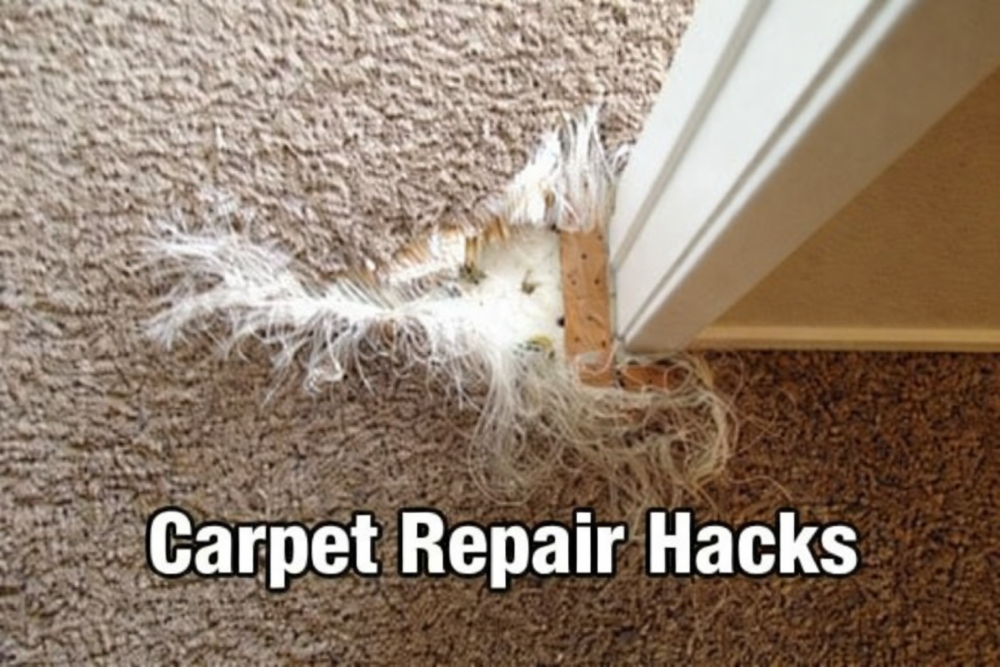
A torn carpet edge near a doorway may look beyond saving, but sometimes a few clever tricks can tidy it up and stop the damage from spreading. Here are some lesser-known carpet repair hacks:
1. Ice Cube Trick As Carpet Repair Hacks
If the fibres around the tear look crushed or flat, place an ice cube over the area and let it melt. Once slightly damp, gently lift the fibres with a spoon or fork. This helps revive the pile and makes the repair blend better.
Tip: This trick works best on synthetic carpets such as nylon or polyester, where the fibres can spring back after moisture. Avoid soaking the area or using it on delicate natural fibres like wool, as too much moisture can damage the backing or cause discolouration. Always let the carpet dry completely afterwards.
2. Invisible Thread Stitching
For small rips, use clear fishing line or strong nylon thread instead of regular thread. Carefully stitch the backing from underneath. It holds the carpet together while remaining practically invisible from above.
Tip: This method works best for small tears where the carpet backing is still intact. Avoid pulling the stitches too tight, as this can cause the carpet to pucker or create visible tension lines. If the tear is large or the backing is badly damaged, a professional repair may be the better option.
3. The “Hidden Donor” Patch – As Carpet Repair Hacks
Instead of buying a matching piece, cut a small patch from a hidden area, like inside a wardrobe or under furniture. Glue it neatly into the damaged section so the colour and texture match perfectly.
Tip: This method works best for small, localised damage where a clean patch can fit neatly into the affected area. Use a sharp utility knife to cut both the damaged section and the patch carefully so the edges align well. Always test the adhesive on a small hidden spot first to avoid staining or stiffening the carpet fibres.
4. Trim and Seal Method
Loose fibres can continue to unravel. Trim the frayed edges carefully, then apply a small amount of carpet seam sealer or clear fabric glue to stop further fraying.
Tip: This method is best for minor fraying or loose fibres along edges and seams. Be careful not to cut too deeply into the carpet pile, as this can make the damaged area more noticeable. Apply only a small amount of sealer or glue to avoid hard spots forming once it dries.
Professional Carpet Repair
Small carpet repairs like these can make a surprising difference and may help your carpet last longer. Indeed, taking a little time to address minor damage early can prevent the problem from spreading and keep your carpet looking neat and well-maintained. While these simple DIY methods can be helpful for small issues, larger damage or heavily worn areas may still require professional carpet repair to achieve the best and most lasting results.