


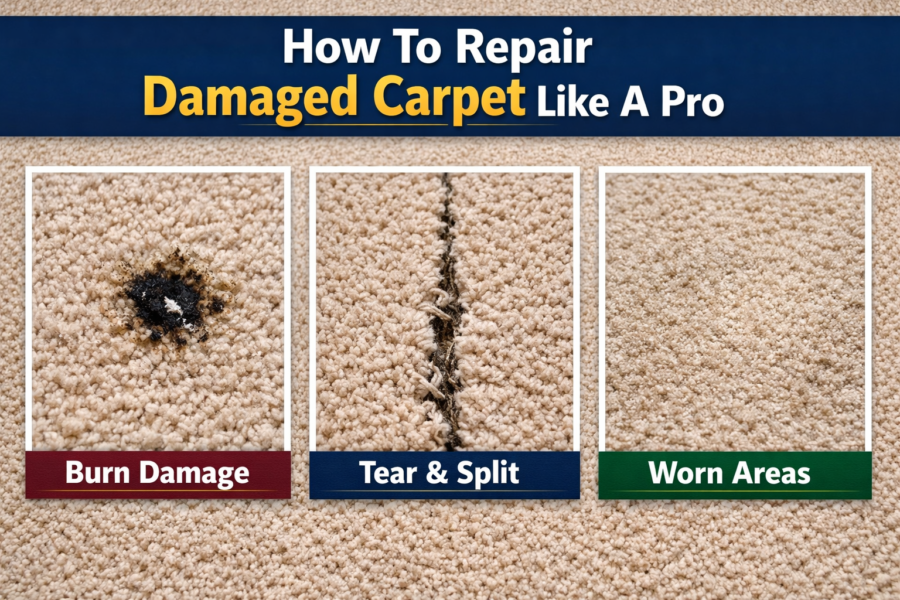
Carpet damage from burns, tears, or general wear is quite common. In many cases, it can be repaired without needing a full replacement. Indeed, when attempting any DIY carpet repair, it’s important to proceed with care. A careful approach protects the surrounding carpet fibres and helps prevent additional issues from developing. This carpet repair guide outlines what you can do to restore damaged carpet like a pro.
Carpet Repair Guide On Burn Damage
Small burns from cigarettes, irons, or candles can often be repaired with a plug or patch method. Using a sharp utility knife, carefully cut out the burnt fibres, keeping the cut neat and square. Take a matching piece of carpet from an off-cut or a hidden area (such as inside a wardrobe), trim it to size, and secure it in place with carpet adhesive or double-sided carpet tape. Gently blend the fibres using scissors or a carpet brush so the repair disappears into the surrounding pile.
Carpet Repair Guide On Tears and Splits
Carpet tears usually occur along seams or in high-traffic areas. To repair this properly, lift the carpet slightly and place seam tape underneath the tear. Apply heat with a seam iron to activate the adhesive, then press the carpet edges firmly together. Once set, use a seam roller or your hands to smooth the fibres and ensure the join is tight and flat. This carpet repair method restores strength and prevents the tear from spreading further.
Worn or Flattened Areas:
Worn patches and flattened pile are common in hallways and lounges. For minor wear, a stiff carpet brush or rake can help lift the fibres back up. In more severe cases, professional-style re-piling or patch replacement is the best option. This involves removing the worn section and inserting a matching piece using carpet adhesive, then trimming and blending the fibres for a seamless finish.
Act Promptly
Dealing with carpet damage promptly is very important. The longer you leave carpet damage untreated, the worse the problem becomes. If your home has carpet, it’s wise to recognise that your carpet will likely experience some damage at some point, especially in households with pets. Accidents, spills, and wear are simply part of everyday life.
Keeping a few basic cleaning tools and spot-treatment products on hand is a sensible precaution. This allows you to respond quickly when damage occurs, helping to minimise stains, odours, and potential long-term issues. Of course, if you don’t have the time or the proper tools to make repairs yourself, it’s better to hire a professional IICRC-certified carpet repair expert rather than letting the damage persist and doing nothing.