


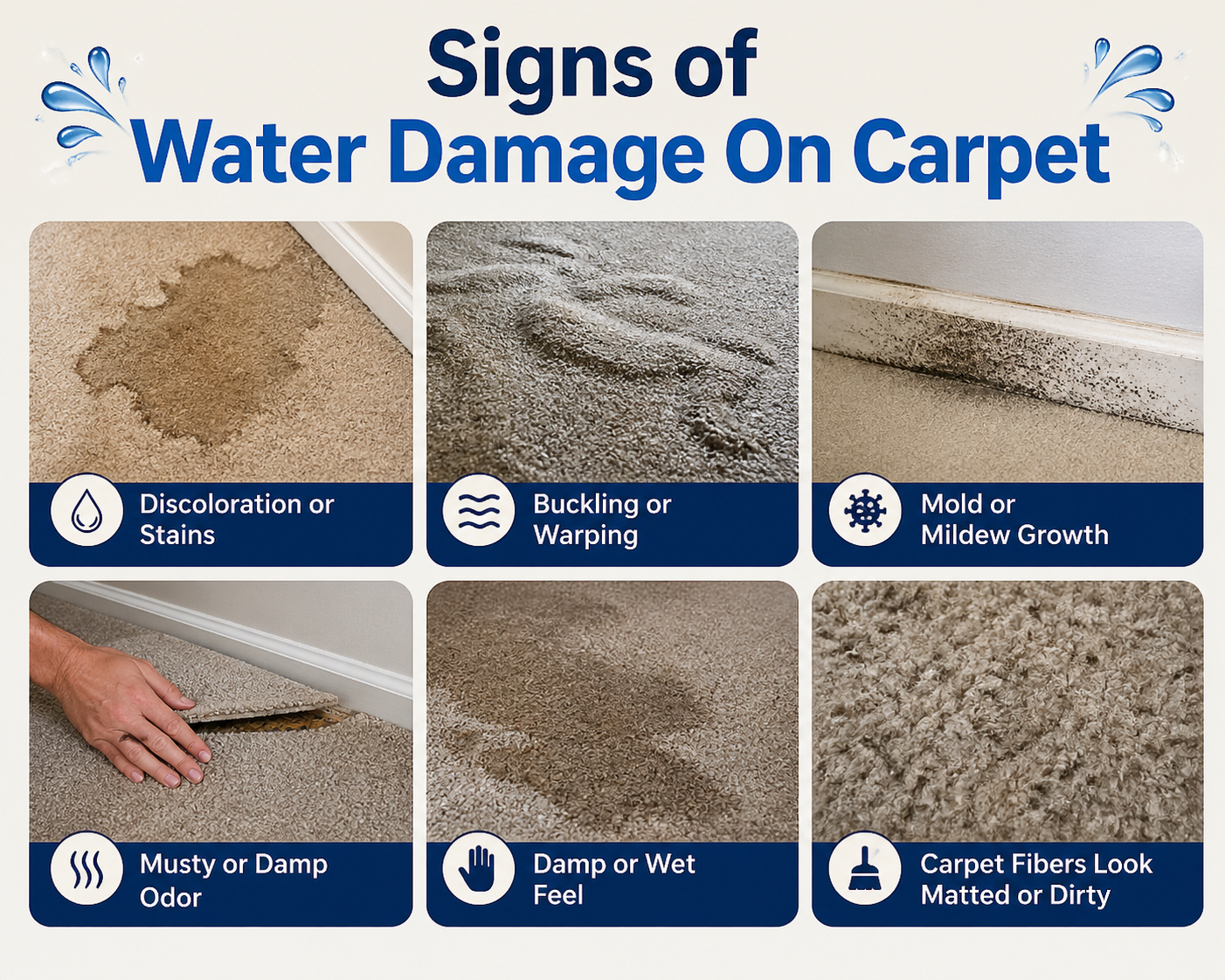
Water damage on carpet doesn’t always show up in obvious ways. It’s not always about a flooded room; sometimes, it starts small and quietly worsens over time. A faint musty smell, a slightly darker patch on the floor, or even a subtle change in how your carpet feels underfoot can already be early warning signs. Many homeowners tend to ignore these at first, thinking they’ll dry out on their own or that it’s nothing serious. But the truth is, moisture has a way of sinking deep into carpets, underlays, and even subfloors, where it becomes harder to detect and more expensive to fix later on. The earlier you notice these signs, the better your chances of preventing long-term damage.
Here are the 6 signs of water damage on carpet and what you can do about it:
1. Discolouration or stains
When you see dark patches, yellowing, or uneven colour, that’s usually trapped moisture or dirty water soaking into the fibres.
What to do:
Act fast. Blot (don’t rub) with clean towels, then use a mild carpet cleaner or a mix of water + white vinegar. If the stain keeps coming back after drying, that means moisture is still underneath—at that point, you’ll need deeper extraction or professional carpet cleaning.
2. Buckling or warping ( Water Damage )
If your carpet looks wavy or has ripples, water has likely soaked into the backing and loosened it.
What to do:
Drying is step one—use fans, open windows, or a dehumidifier if you have one. Once fully dry, the carpet may need restretching to go back flat. DIY stretching rarely works well, so this is one of those cases where calling a pro is worth it.
3. Mould or mildew growth
Black, green, or even white spots along edges or under furniture? That’s mould starting—and it spreads quickly. Do not ignore it.
What to do:
Light cases: spray a vinegar solution and let it sit before blotting dry.
But honestly—if it’s spread or smells strong, don’t try to DIY everything. Mould can get into the backing and underlay, and that’s a health risk. Professional treatment is the safer route here.
4. Musty or damp odour ( Water Damage )
That “musty” smell is a big red flag. Even if the carpet looks fine, trapped moisture is already causing bacterial growth.
What to do:
Sprinkle baking soda over the area, leave it overnight, then vacuum. At the same time, improve airflow—use electric fans or sunlight if possible. If the smell stays after a couple of days, it means the base layer is still wet.
5. Damp or Wet feel
If your carpet feels cold, sticky, or damp when you step on it, water hasn’t fully dried—and that’s where bigger problems start. You must act fast.
What to do:
Dry it ASAP. Place dry towels over the area and press to absorb moisture, then use fans or air movement continuously. Avoid just “air drying” without airflow—it’ll take too long and may lead to mould.
6. Carpet fibres look matted or dirty ( Water Damage )
If your carpet suddenly looks flat, rough, or matted down, water has likely damaged the fibres and trapped dirt deeper within.
What to do:
Once dry, try brushing the fibres gently or vacuuming thoroughly to lift them. A proper deep clean helps restore the texture. If it still looks worn out, the fibres might be permanently damaged.
Real Talk
Water damage on carpet is one of those things that gets worse quietly. What starts as a small damp patch can turn into mould, odour, and even structural issues underneath.
The key is to act early and not dismiss the subtle signs. Regularly checking areas prone to moisture, such as near windows, under furniture, or around entryways, can make a big difference. If something doesn’t feel or smell right, it’s worth looking into before it gets worse.