


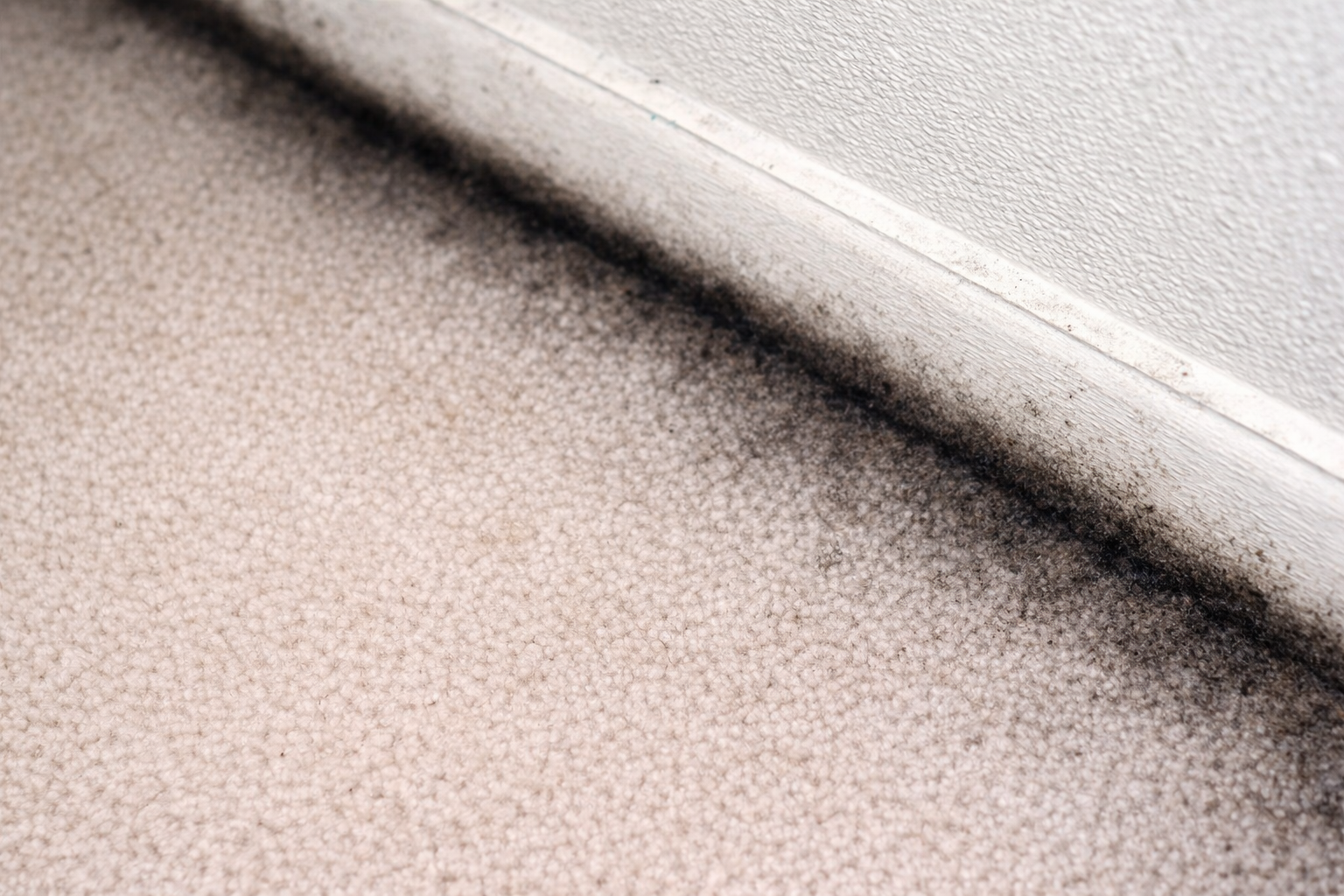
Have you ever noticed black edges on carpets, especially along skirting boards, doorways, or under doors? These dark or black lines are commonly known as carpet filtration lines. Many homeowners initially think these marks are caused by spills or poor vacuuming, but that is usually not the case.
Furthermore, filtration lines occur when air moves through tiny gaps between the carpet and the wall or under doors. As air passes through these small spaces, it carries dust, soot, and airborne particles that become trapped in the carpet fibres. Over time, these particles accumulate and form dark lines that can make an otherwise clean carpet look dirty.
High Outdoor Pollution
Here’s the thing—air movement inside your home plays a huge role in this problem. Warm air from your heating or cooling system, or even just natural airflow, carries tiny debris all around the house. When air moves through narrow gaps along the edges of a room, the carpet acts like a filter and traps those particles.
If you burn candles, use a fireplace, cook with oils, or live in an area with high outdoor pollution, you’ll likely see filtration lines pop up faster. That’s because those activities create fine particles that float through the air. Even everyday dust and pet dander add to the buildup, slowly creating those noticeable dark edges along your carpet.
Breaking Down Trapped Soil
Many people try to remove these marks with regular vacuuming, but filtration lines are often difficult to eliminate using standard household cleaning methods. The particles responsible for these stains can become deeply embedded within the carpet fibres and sometimes even affect the edges of the backing. Because of this, the dark lines may remain visible even after routine cleaning.
Indeed, professional cleaning can help loosen and remove the trapped dirt, which can improve the look of those dark edges. However, if the build-up has been there for a long time, some severe filtration lines may not come out completely.
Preventing Filtration Lines (Black Edges On Carpet)
Preventing filtration lines is often easier than removing them once they appear. Sealing gaps under skirting boards can help reduce the movement of dusty air through carpet edges. Improving ventilation and regularly maintaining heating or air conditioning systems can also help prevent build-up. Using quality doormats and reducing indoor pollutants such as smoke or candle soot can also minimise the amount of airborne particles inside the home. With proper care and periodic professional carpet cleaning, homeowners can keep their carpets looking cleaner. As a result, it reduces the likelihood of those dark edges forming over time.
Practical Tips For Removing Black Edges On Carpets (often called carpet filtration lines):
1. Vacuum edges regularly using a crevice tool
Make sure you focus on skirting boards, doorways, and under doors, that’s where fine dust and airborne particles tend to collect without you even noticing.
2. Use a mild carpet cleaning solution
Lightly blot the dark edges with a clean cloth and a mild, carpet-safe cleaner. Just be careful not to over-wet or scrub too hard, as that can damage the fibres or spread the mark further.
3. Reduce airflow gaps where possible
Filtration lines often form where air gets pushed through small gaps under doors, skirting boards, or floorboards. Sealing those gaps can go a long way in preventing future build-up.
4. Change your HVAC air filters regularly
A dirty or clogged filter can’t catch all the dust and debris floating through your home, so those particles just keep circulating and settling along your carpet edges. Swapping it out every 1–3 months makes a big difference in keeping the air and your carpet cleaner.
Here’s a handy tip: black carpet edges can be surprisingly stubborn. That’s because the particles are often super fine and get embedded deep into the fibres. In heavier cases, trust me, professional carpet cleaning usually gives way better results.